About Sierra Compost
The high elevation and low population density of our region make diverting organics from the landfill more difficult than urban areas. High costs, logistics per ton of material, and fewer generators of organic waste create barriers to local composting infrastructure. Landfill disposal is often the cheaper and more convenient option, as travel distances between communities increase hauling time, fuel costs and emissions.
Mountain conditions further complicate operations. High elevations bring snow, freezing temperatures, and seasonal road closures, which can disrupt collection routes, slow composting processes, and limit year-round facility access. Steep terrain also constrains suitable sites for composting infrastructure and increases transportation challenges.
As such, Sierra Compost is focused on developing decentralized, local composting programs that provide an affordable alternative to landfills, and create jobs, economic opportunities, and community.
Sierra Compost is funded through the Sierra Jobs First Catalyst Program, running from March 2025 through September 2026. This effort is centered around:
- Strategic growth planning for current compost operations with Chicken Ranch Rancheria’s Suchumumu Farm and Bishop Paiute Tribe’s Food Sovereignty Program
- Building Tribal capacity to lead composting initiatives through community compost pilot projects
- Creating employment opportunities through education, training, and compost infrastructure development
This project was catalyzed through a collaboration between the California Alliance for Community Composting, Chicken Ranch Rancheria of Me-Wuk Indians, and Bishop Paiute Tribe’s Food Sovereignty Program. Collaboration and coalition building are central tenets of the Sierra Compost mission, bringing our Sierra communities together by way of resilient circular economies.
Our program continues to expand organics collection across Tribal lands in support of food sovereignty and long-term sustainability. For more information on how these collaborations are translated into jobs, organics diversion, and high-quality compost to support our food systems, check out the linked project pages below.
Sierra Compost Activities
Business Planning with the Food Sovereignty Program and Chicken Ranch Rancheria
Pilot Projects
Sierra Compost Partners
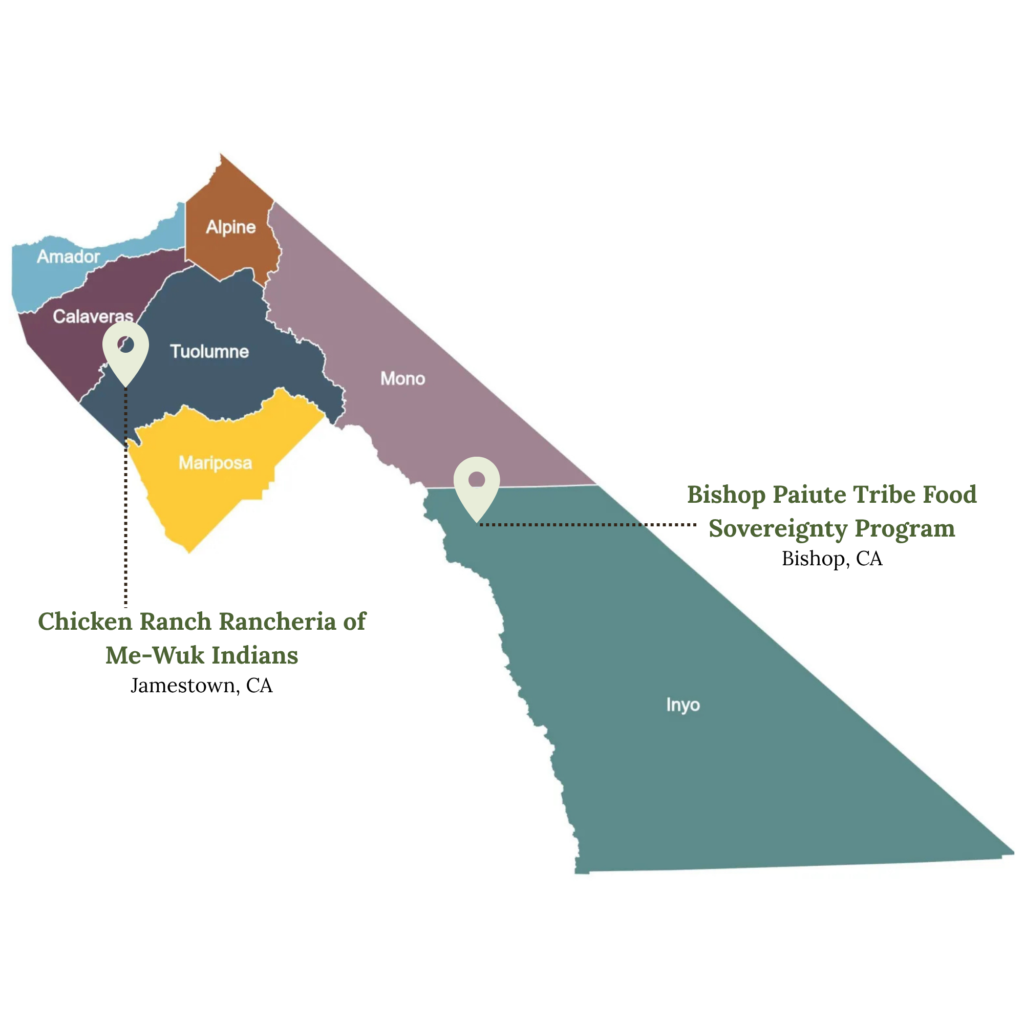
Location: Jamestown, CA
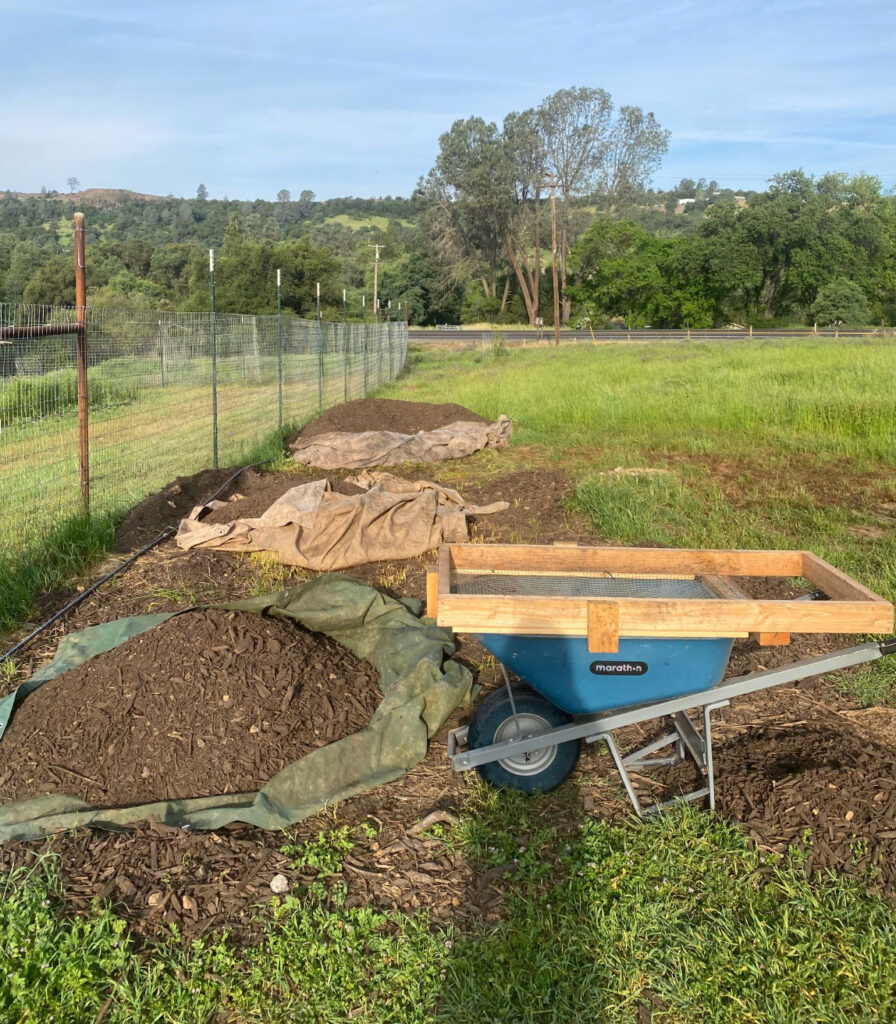
The Chicken Ranch Rancheria Compost Program transforms food scraps collected from the Casino Resort restaurants into nutrient-rich compost that supports soil health at Suchumumu Tribal Farm. This compost is used to grow produce for Tribal members and resort kitchens, strengthening a closed-loop system that reduces waste, builds soil, and nourishes our community.
Location: Bishop, CA
The Bishop Paiute Tribe’s Food Sovereignty Program collects kitchen scraps from the Wanaaha Casino, Elders Program, Bishop Indian Head Start, and the Yuhubi Nobi Gas Station Deli, which we turn into much needed soil amendment for our community gardens.
The Food Sovereignty Program also accepts green material donations during our summer community markets and on an as-available basis. Contact fsp@bishoppaiute.org or call our Compost Systems Technician at (760) 920-7853 to inquire about drop-offs.
Location: Statewide
California Alliance for Community Composting (CACC) works directly with communities to create sustainable composting infrastructure, promote workforce development, and advance climate resilience. CACC’s goal is to build resource recovery capacity at the local level, ensuring that communities—especially those historically underserved—benefit from the economic, environmental, and social opportunities of composting initiatives.
CACC is a member working group of the most active community composters in the state. Our collaboration has developed since 2017 to share resources and support efforts that work to remove regulatory barriers for community-based composting operations in California. CACC’s team consists of individuals skilled in community composting and ecological design, project coordination and financial planning, social entrepreneurship, policy advocacy, software development, data management, analysis and visualization, and community organizing. We have supported over 100 community-based organizations with financial and technical assistance to launch or expand 217 small-scale compost operations with $6.65M in grants from the California Department of Resources Recycling and Recovery (CalRecycle) and $575K from the California Employment Development Department (EDD).
CACC’s network exemplifies the diversified and decentralized organics recovery industry emerging in California that is providing important community benefits to strengthen education on compost, food security, economic resilience, and environmental justice, including:
- Local access to healthy, fresh, and chemical free foods
- Community outreach, engagement, and education
- Green space development, habitat creation, and local beautification
- Numerous environmental impacts, such as increased soil water retention and ground water infiltration, decreased methane emissions and increased carbon sequestration, improved soil health and biodiversity increases, and cleaner air
- Providing financial resources to low-income residents (through both short- and long-term local job creation)