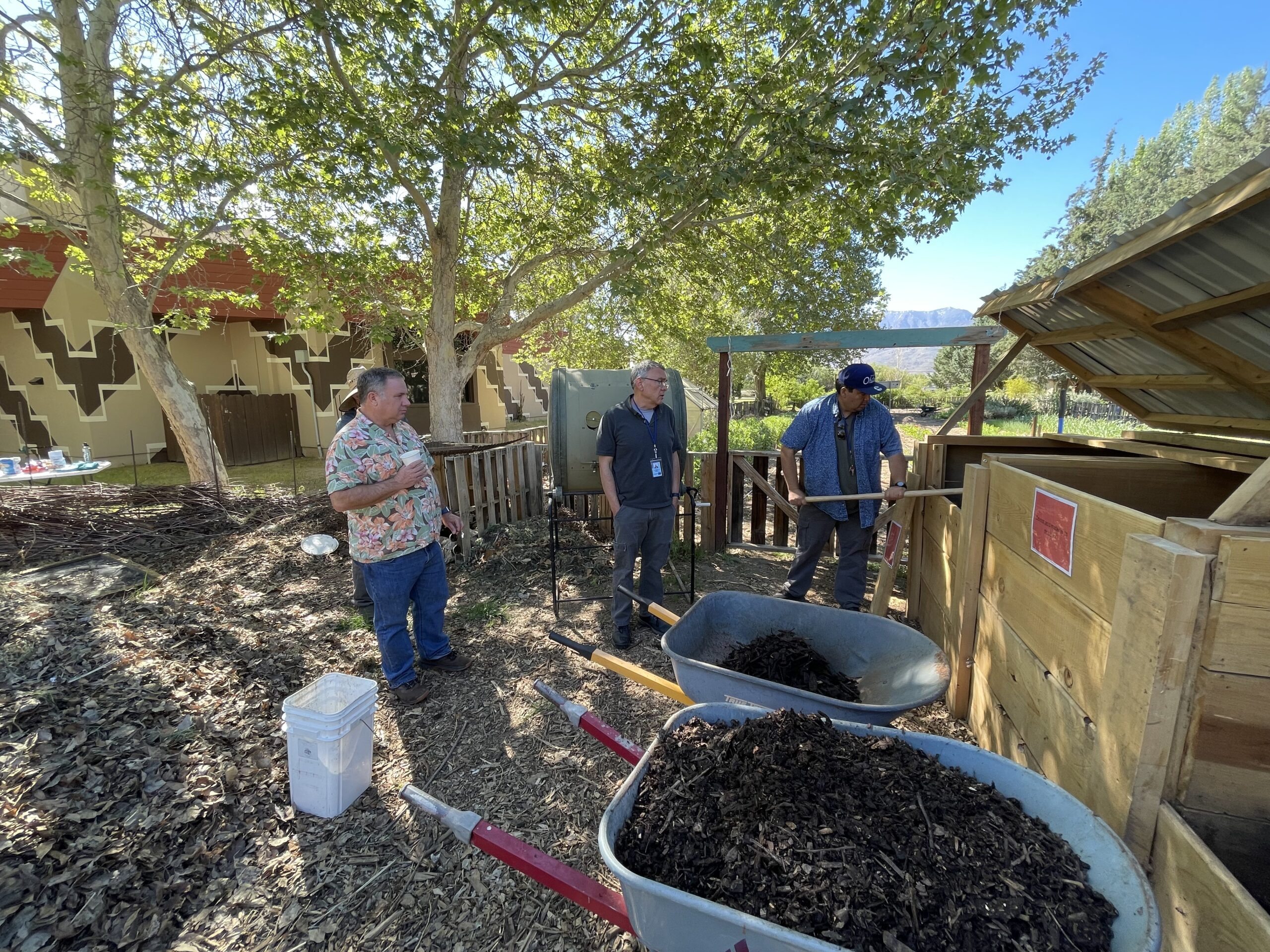
Last week, we gathered in the fresh air and sunshine at the Bishop Paiute Tribe Food Sovereignty Program compost site and community garden for hands-on learning about their composting practices and vision for the future.
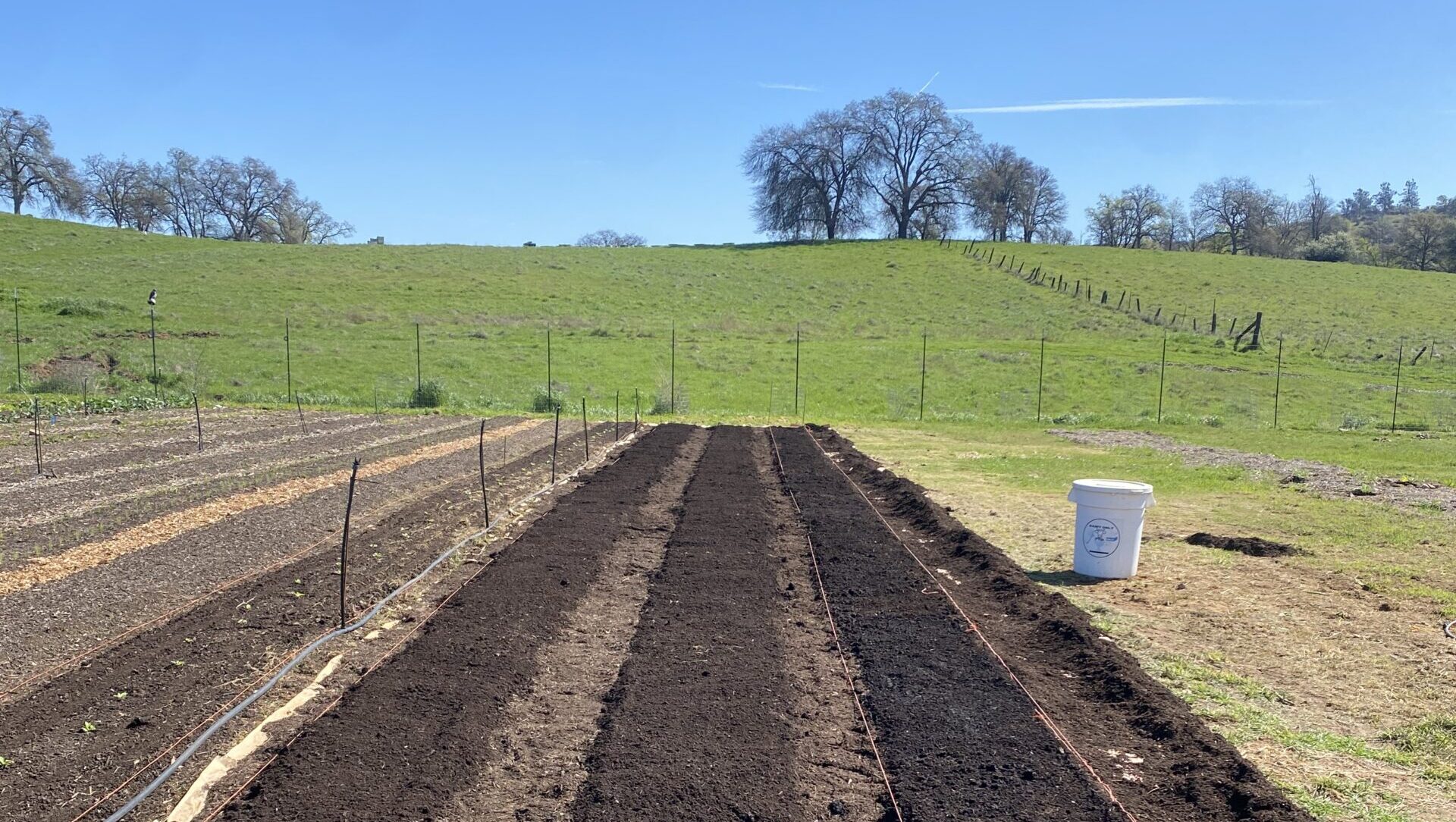
The best part? Time to get our hands dirty and help physically turn some compost that will feed the soil of the community garden, which will then feed our neighbors.
Compost as a Foundation for Local Food
“If the kitchen is the heart of the home, gardens are the heart of the community. Compost and soil are the foundation for these gardens, and our communities.” -Wade Felt, BPT Food Sovereignty Compost Business Operations Planner
As we shoveled the slow-cooking compost pile out onto a tarp for turning, we heard from Wade Felt, Eduah Schwenk, and Morgan Cox on how this compost supports the neighboring community garden.
With the three-bin aerated static pile (ASP) system, the Food Sovereignty team is producing about 15 cubic yards of compost per year. Compost is applied twice a year in the community garden, with a total compost need of approximately 20 cubic yards. As the compost team is growing operations, they expect to cover that need within the next year and fully supply the garden’s compost — and as such, supply nutrients and maintain even water for locally relevant produce.
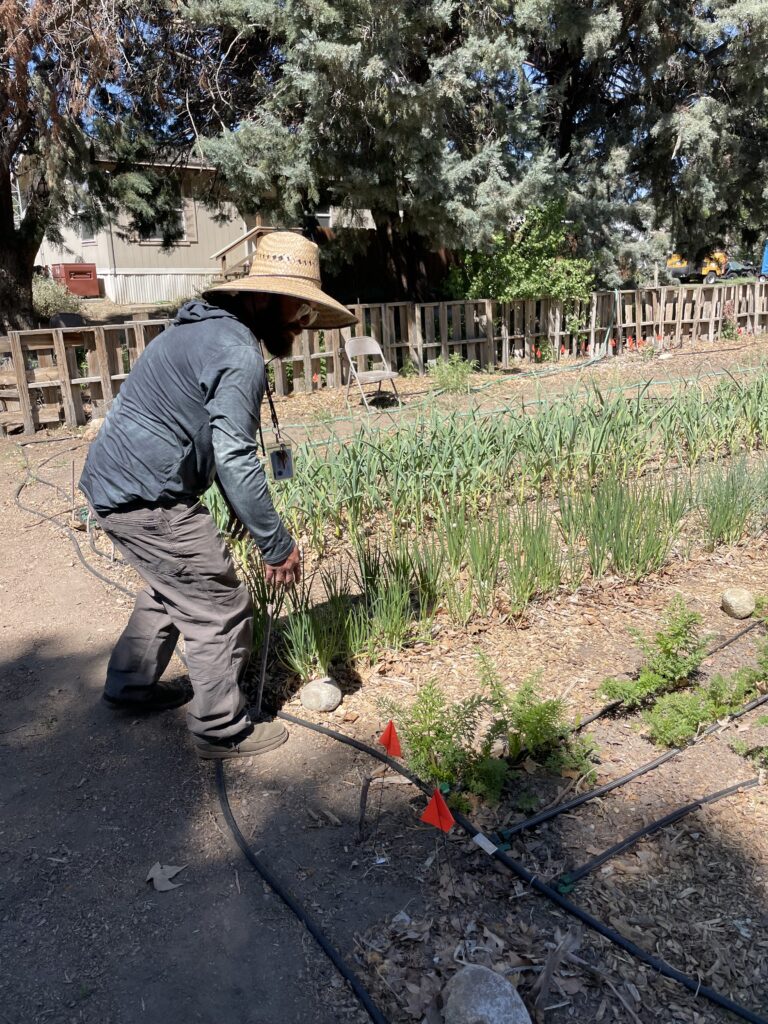
Along with staple crops like radishes, garlic, and kale, the Food Sovereignty garden is producing food local to the area — including Taboose (an edible tuber) long cultivated by the Paiute and surrounding Tribes. A steady supply of high-quality compost means the community garden can continue to flourish, and the nutrients supplied through the garden are returned to the soil as much as possible.
Learning as a Process
Eduah explained that the key to a good compost pile — that is, one that is well-managed and cooking correctly — is time spent working with the compost and observing the changes weekly. Understanding moisture, texture, and decomposition in real time helps guide adjustments better than only relying on rigid formulas, especially in challenging conditions like the Eastern Sierra.
Questions arose specifically around the management of feedstocks, from access to the right material to managing potential contaminants. Like with managing the pile itself, Eduah’s advice centered around understanding your feedstocks, where they are coming from, and limiting contamination at the source. With weeds, such as bermudagrass and bindweed, the garden staff and compost team are especially careful about separation to keep potential weed seeds out of the compost that may cause future problems. Throughout the composting process, continued learning and observation are key to creating a high-quality product.
Pathways for the Future
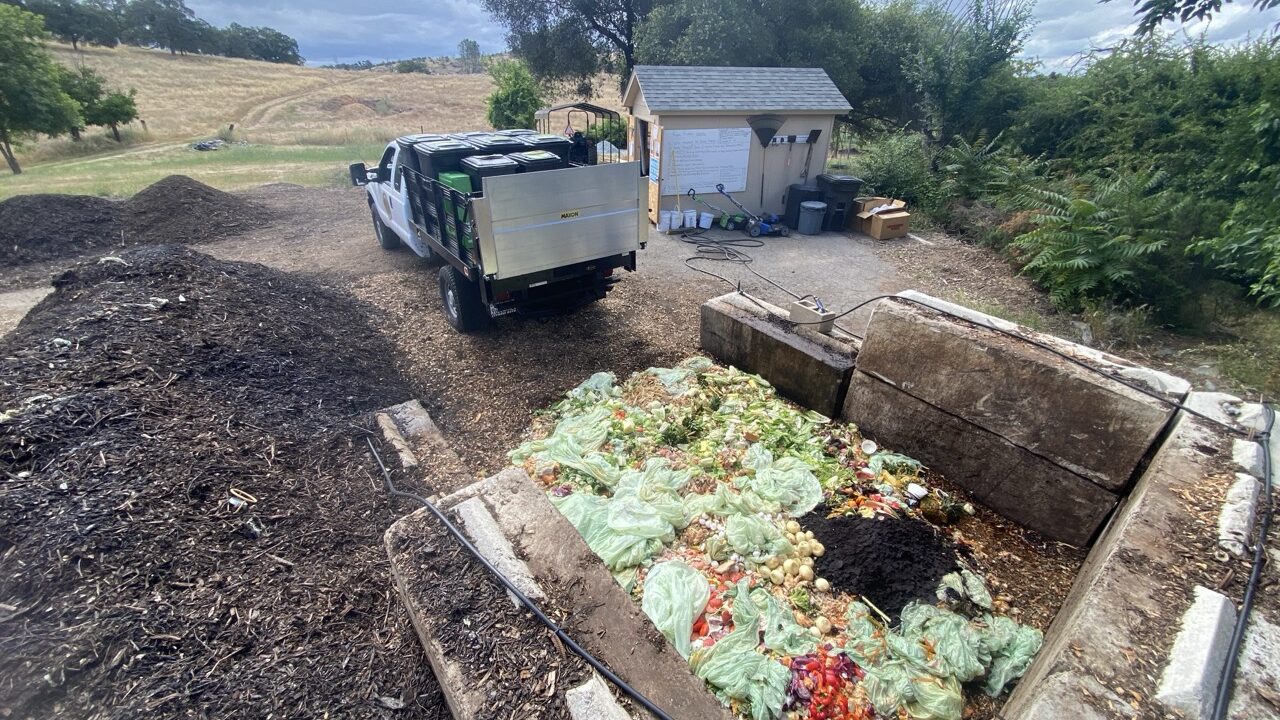
Through the Sierra Compost effort and concurrent programs, the Food Sovereignty Program sees a strong future for building a lasting compost system that not only supports the community garden and Elder’s garden, but creates a foundation for soil health and organic material management across the greater community. The future may look like more partnerships to divert organic waste away from landfills and into compost, a greater focus on edible food recovery, or even partnerships to pick up and haul organic material.
Stay tuned with the Bishop Paiute Tribe Food Sovereignty Program through our newsletter (sign up below!), or through upcoming events for more updates as the Food Sovereignty Program continues to build a resilient local food system.