A Week with the Compost Operator Training Course
Over the first week of June, the Sierra Compost team took to Merced for the Compost Operations Training Course — five days of in-depth compost operator training and instruction from both professionals and educators on “the art and science of commercial-scale compost production and marketing” (Compost Research & Education Foundation).
Our five-person Sierra Compost cohort represented Tuolumne, Calaveras, and Inyo counties. Sierra Jobs First funding supported the training of two Tribal staff with Bishop Paiute Tribe and Chicken Ranch Rancheria respectively, the Calaveras Recycling Coordinator, and two California Alliance for Community Composting staff.
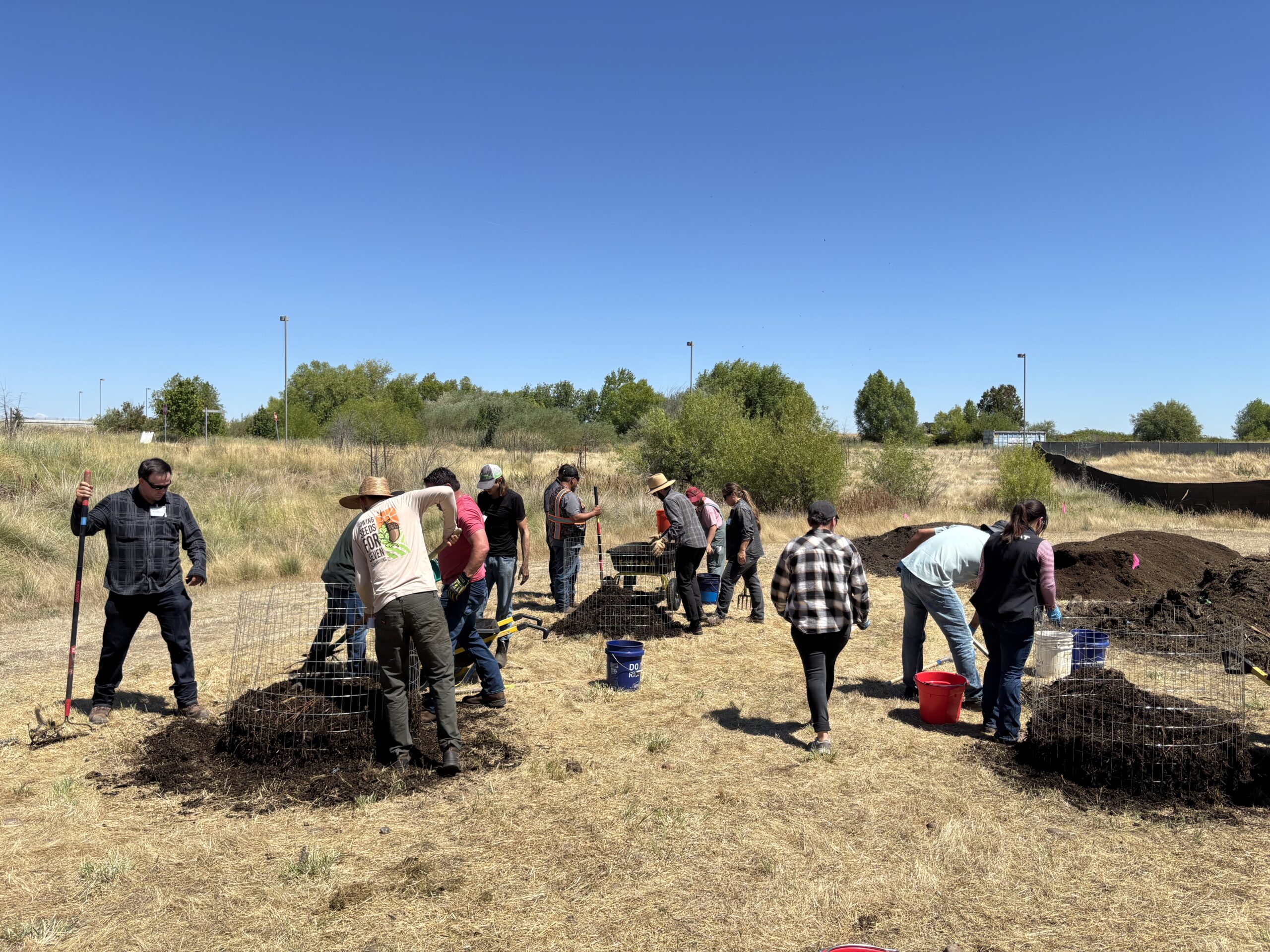
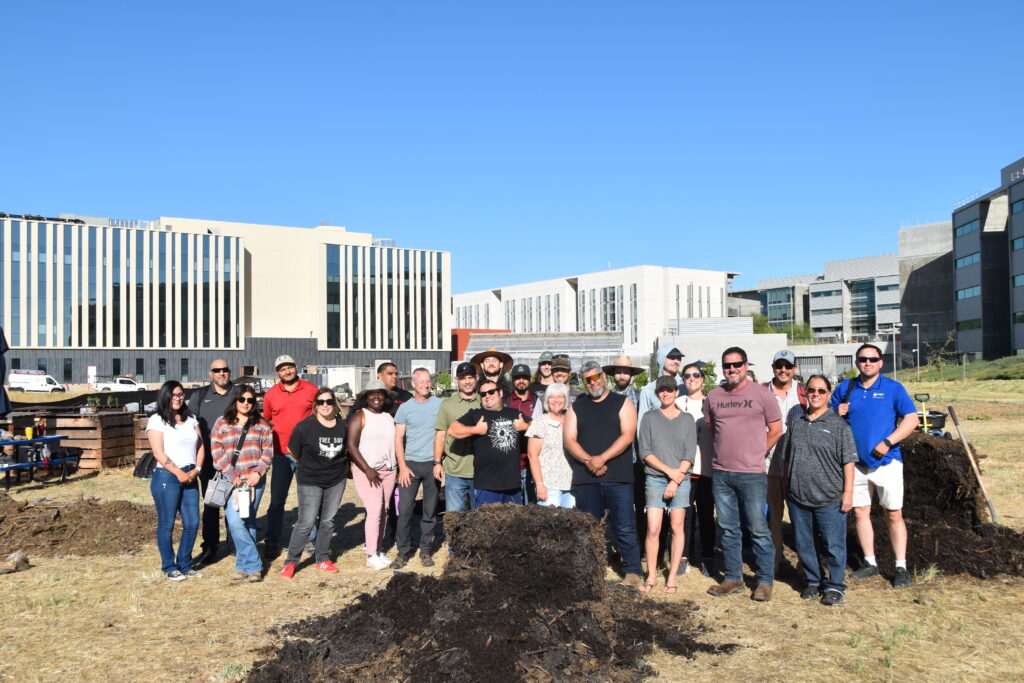
The cohort experienced the full immersion into compost training, from a team pile build to commercial facility tours as well as formal lecture and instruction from researchers and educators with UC Merced and CREF. Were they long days? Yes — but full of everything needed to operate and market successful composting systems. Learn more about the experience from two members of the cohort below!
Eduah’s Experience
Commercial Composting
On Wednesday, we toured commercial compost facilities across the region. The first site on our tour was busy and loud with bulldozers going to and fro. One worker, with his hard hat and yellow vest, wrangled film plastic from his trailer with a long metal stick. Plastic littered the floor of all shapes, sizes, and colors. It truly showed how great the challenges of food packaging and compost contamination are at a commercial scale.
We stepped into the massive industrial building where the de-packager—an implement used to separate food from containers—was found. From there, we moved to the oversized “yard bin” where the spent containers of sugar-free flavored syrup bottles lay crushed in a pile from the THOR machine — a colossal contraption with a massive swinging hammer that would swing and crush the containers of whatever food needed de-packaging.
Moving on, we walked outside around the perimeter of the large-scale site where the 200-foot ASP (aerated static piles) were located and covered with a Gore-Tex tarp. A solitary red hawk flew above the composting site, surely surveying the land for tasting morsels of mice and rats. He was so high up, catching the updrafts of warm air and methane.
We then looped around the site. There, massive screeners powered by diesel engines shifted and screened the finished compost on an industrial scale. Many finished compost piles had bits and pieces of film plastic throughout. But there were a few piles of exceptionally clean piles of rich, dark compost as tall as a two-story building.
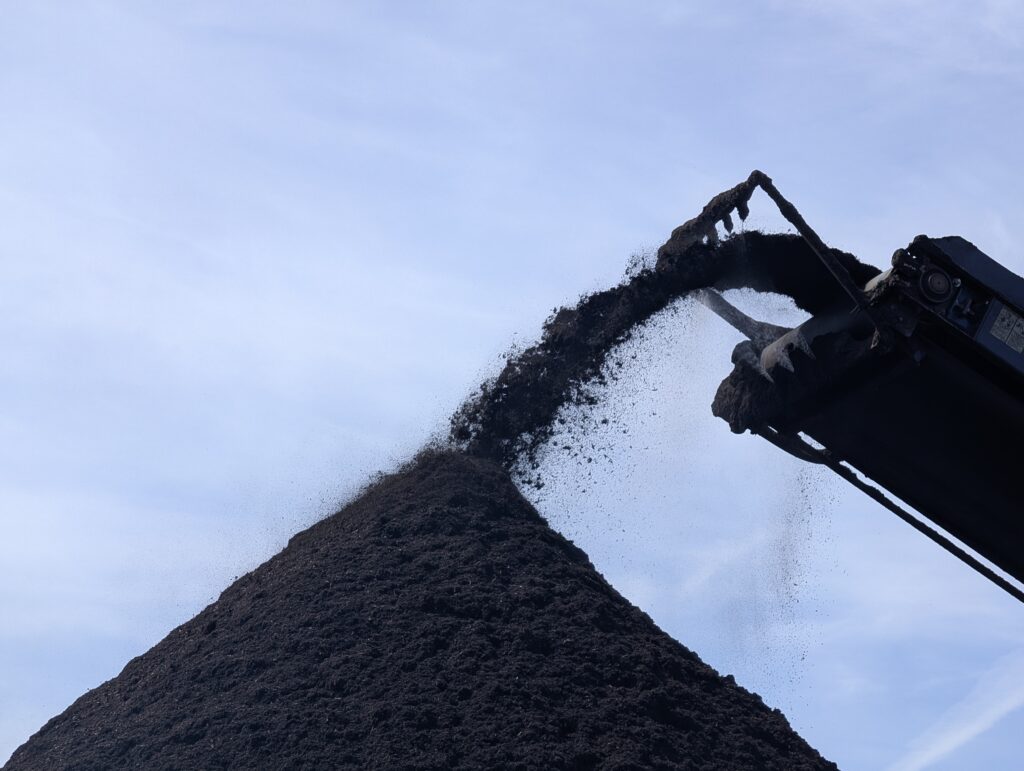
The facility had a small machine for bagging finished compost, mostly for end-users who have small home gardens. The bags were adorned with a colorful logo of the company name. I was intrigued by the tractor and colorful fruits and veggies on the front of the heavy-duty plastic bags. All the operators were very inviting and seemed to enjoy showing us around.
Community Composting
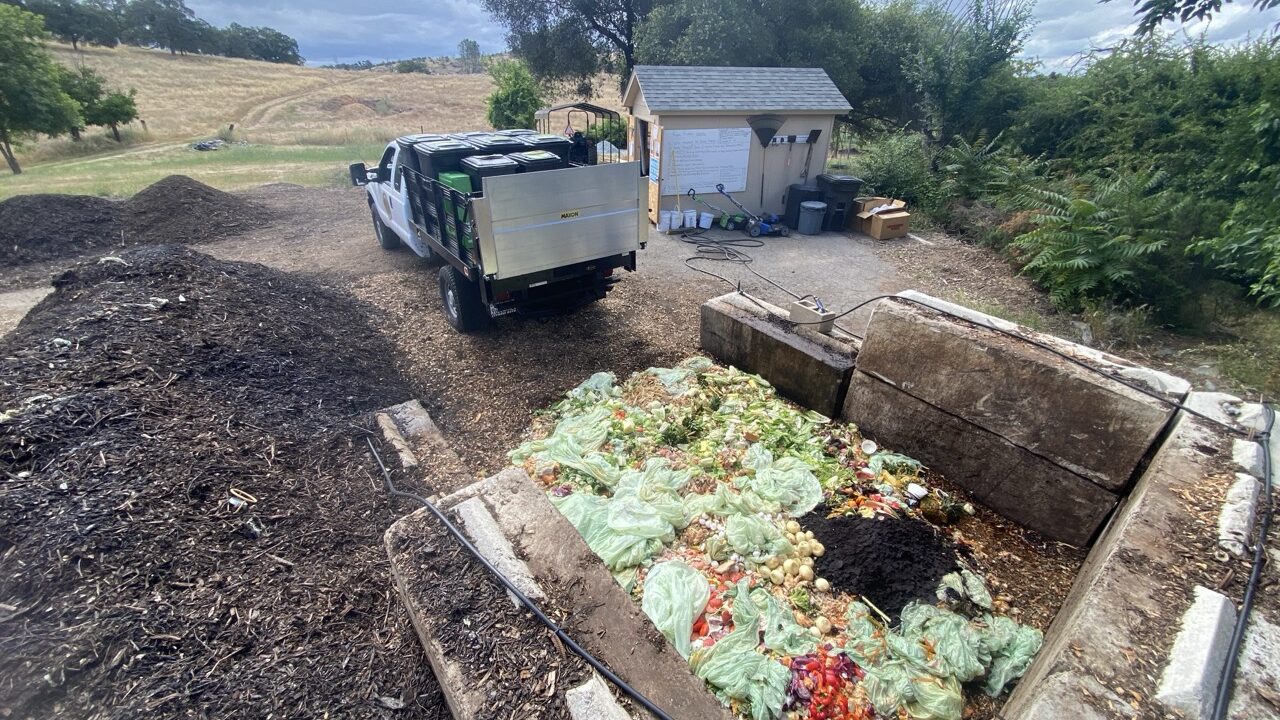
In a distinct change, we stopped at a quaint community garden in the middle of nowhere, behind a church. A kind soul of a mother sat us down under a shade to protect us from the Central Valley heat. She introduced herself and her main worker there on the farm.
She first read us the lab results of their compost pile located at the community garden. In her view, this garden site was not only a way for the migrant workers to grow and feed themselves, but was also sort of a haven for those working in the nearby fields. She then showed us her compost pile —a humble plot of land growing beautiful things.
The noise of industrial heavy equipment and machinery was replaced by a variety of bird species chirping. A very humble pile of compost sat in wait for us to examine. With the sunflowers reaching for the sky, the woman overseeing the small-scale farm walked us through her rows of flowers and fruits on our way back to the bus. The instructors insisted that we had to leave and carry on the tours, against everyone’s wishes to stay just a little bit longer at the garden sanctuary.
This course, in my opinion, was more focused on large scale composting operations with information useful to that scale. But it was also an eye opener for the human condition on how we deal with our trash and compostables. I left with a new host of information, but also the lingering question — will we ever move away from our plastic dependence?
Kourtnii’s Experience
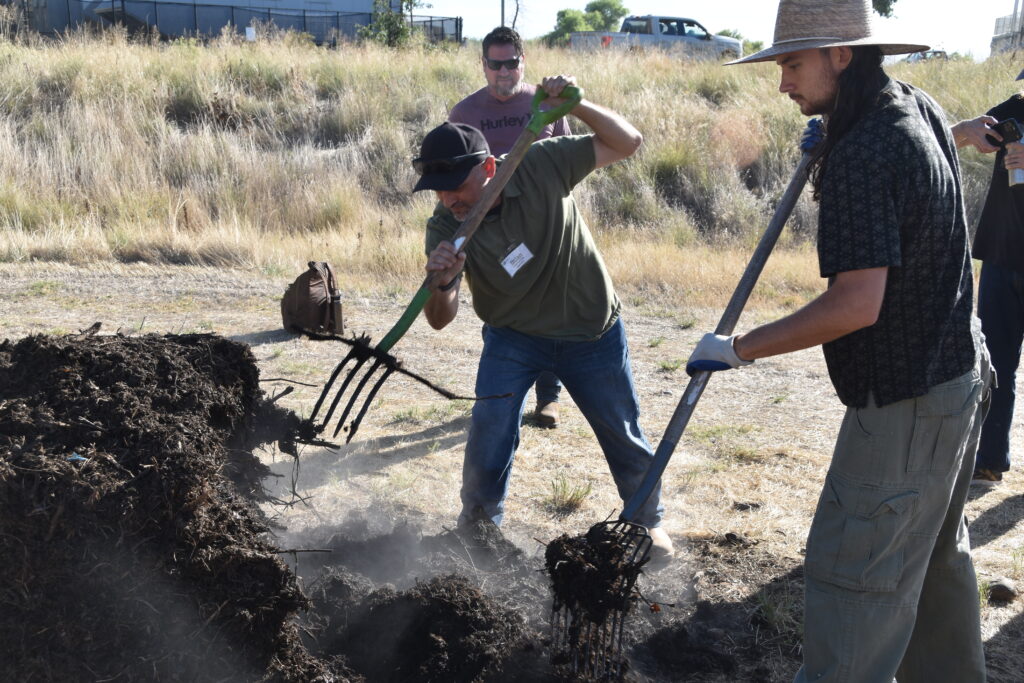
This 5-day course is packed with materials, hands-on lessons, and facility tours that give participants a high-level understanding of many facets of the composting process and operations. The curriculum covered the basics of soil science, compost recipes, compost equipment, and site planning and design, and it directs students to explore additional resources where they can dive deeper into actual scenarios relevant to their project visions.
Many of the covered areas will teach community composters how to optimize processing conditions and replicate efficient models. This knowledge can be valuable for experienced operators considering expanding successful community-based operations.
Of course the best part of any training is always learning from other composters, and the ability to network with diverse participants from all around the US and abroad!